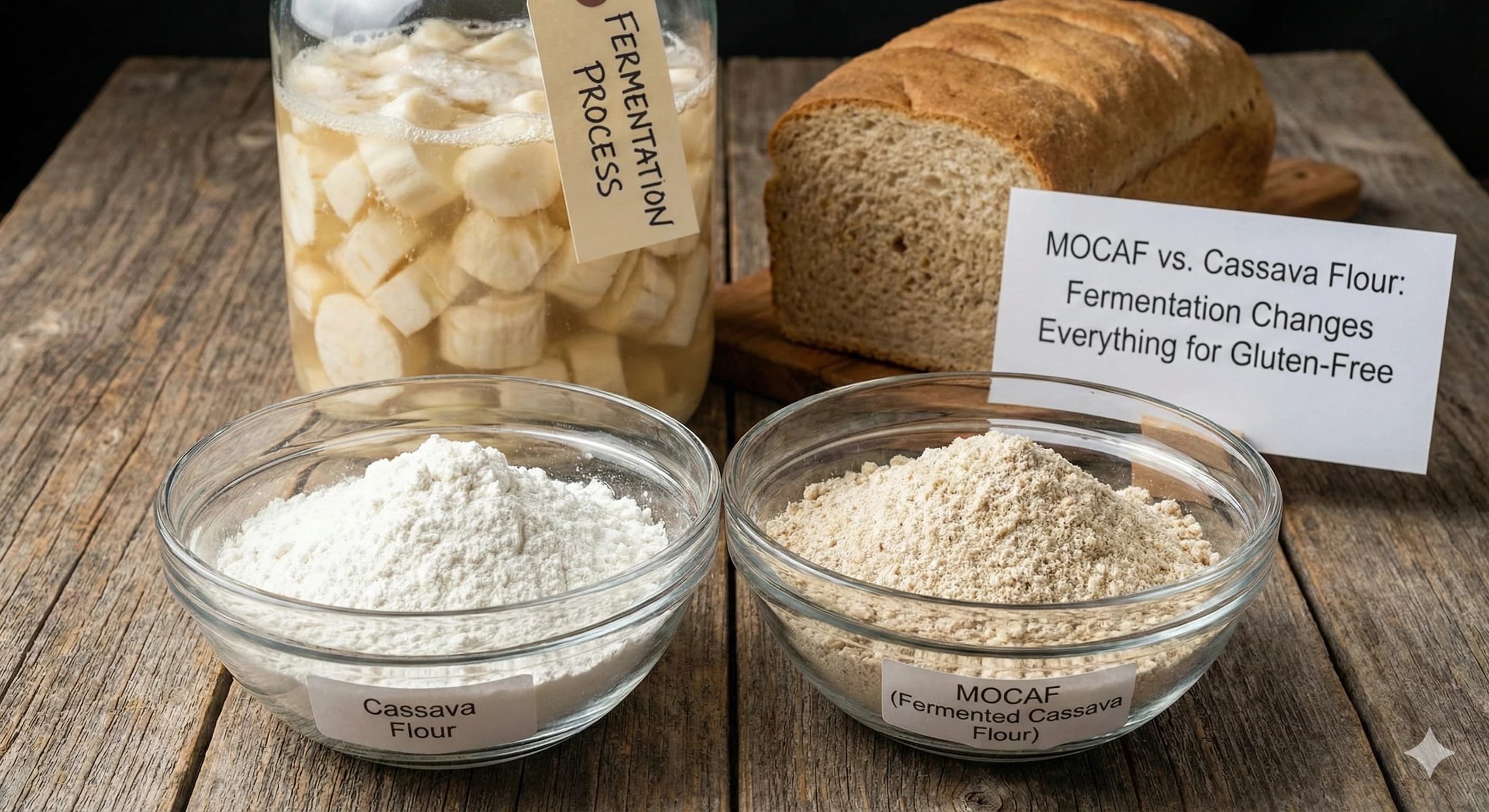
The global demand for Gluten-Free products is skyrocketing. However, many bakers struggle with the common pitfalls of gluten-free flours: dry texture, gritty mouthfeel, and a strong "root" smell.
Introducing MOCAF (Modified Cassava Flour): Indonesia’s premier solution for superior grain-free baking.
It’s Not Just "Cassava Flour"
Many buyers confuse MOCAF with standard native cassava flour. The difference lies in the process. MOCAF undergoes a controlled natural fermentation process using lactic acid bacteria (similar to yogurt or sourdough) before being dried and milled.
The Fermentation Advantage
- Micro Structural Change: The fermentation enzymes break down the cassava cell walls, making the flour structure porous. This increases its water-holding capacity, resulting in moist cakes and soft cookies—solving the "dryness" issue of rice flour.
- Neutral Flavor: The process eliminates the bitter compounds and strong cassava aroma. MOCAF tastes neutral, making it a perfect 1:1 substitute for wheat flour in recipes.
- Digestibility: It is easier to digest and rich in prebiotic properties, appealing to the growing "Gut Health" market.
Application in 2026
From artisanal cookies in Australia to healthy noodles in Europe, MOCAF is proving to be a versatile ingredient. It allows manufacturers to claim "Gluten-Free," "Grain-Free," and "Non-GMO" on their labels without sacrificing taste.
Discover how Nusa Terra’s MOCAF can elevate your healthy product line today.